


New Regulations to the Legionella Testing Laws for NYC Cooling Towers
Updated: Nov 25, 2025

New York City’s building owners have faced a wake-up call in recent years when it comes to Legionnaires’ disease. Today, NYC has some of the nation’s strictest requirements for cooling tower maintenance and Legionella testing, affecting commercial and residential buildings alike. This post will break down the current laws (like Local Law 77 and the NYC Health Department’s cooling tower rules), what enforcement and penalties look like, and what new regulations for legionella testing are on the horizon at the city, state, and federal level. Our goal is to keep it accessible but authoritative – so whether you manage a Manhattan high-rise or a Brooklyn co-op, you’ll know exactly how to keep your cooling towers compliant and safe.
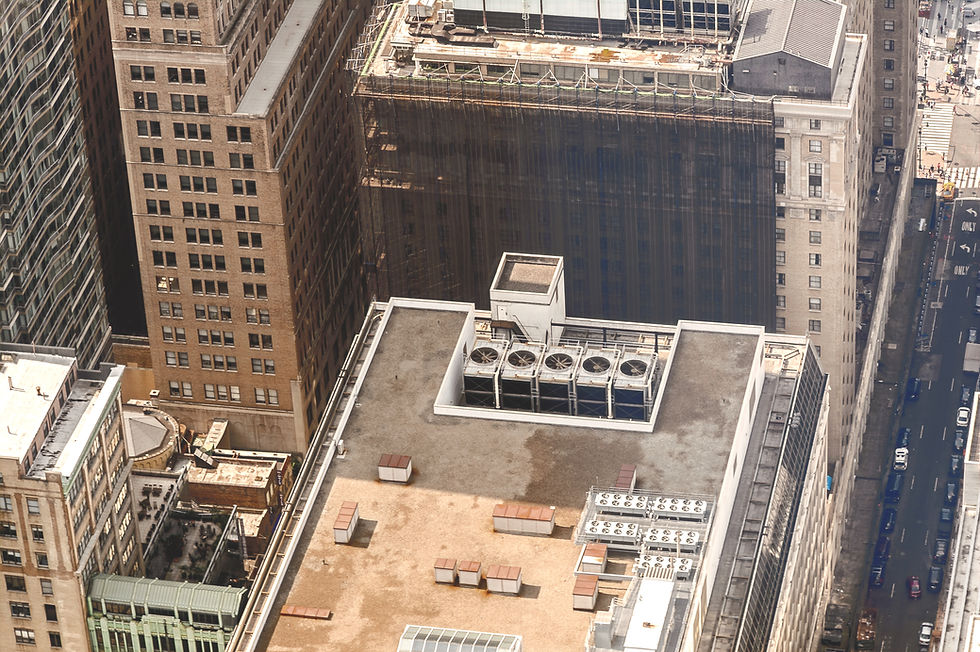
Legionella, the bacterium behind Legionnaires’ disease, thrives in warm, stagnant water conditions often found in cooling tower systems. These towers are common on NYC building rooftops (both residential complexes and commercial facilities) as part of air conditioning or industrial cooling systems. The danger is that if Legionella colonizes a tower’s water and forms aerosolized droplets, people in the vicinity can inhale the bacteria and develop severe pneumonia-like illness. NYC’s authorities recognized this risk and have made cooling tower Legionella control a priority for public health, requiring building owners to proactively monitor and treat their systems. New York City now boasts “among the most rigorous and protective laws and regulations in the country” to reduce Legionnaires’ disease from cooling towers.
NYC’s Current Cooling Tower Regulations (Local Law 77 and Chapter 8 Rules)
After the 2015 outbreak, the city quickly implemented Local Law 77 and detailed Health Department rules to govern cooling tower maintenance. Local Law 77 of 2015 requires all owners of cooling towers in NYC to register their towers with the city, develop and follow a maintenance plan, and perform regular inspection, cleaning, disinfection, and testing for Legionella bacteria. Building owners must also annually certify that they are in compliance with these requirements. These laws apply to any building with a cooling tower – from office high-rises to hospitals, hotels, and large residential buildings – so both commercial and residential property managers are on the hook for compliance. Below is a quick breakdown of key requirements under NYC’s cooling tower rules (found in Chapter 8 of Title 24 of the Rules of the City of New York):
Registration & Documentation: Every cooling tower, evaporative condenser, or fluid cooler in NYC must be registered in the city’s online Cooling Tower Registration Portal. In addition, each tower must have a written Maintenance Program and Plan (MPP), a water management plan that follows industry standards (NYC aligns with ASHRAE Standard 188 on Legionella risk management). You are required to keep a log of all inspections, tests, cleanings, and maintenance actions, and retain these records for at least three years by law.
Routine Water Treatment and Monitoring: Proper water treatment is a daily mandate. NYC rules require continuous water treatment (e.g. automatic feed of biocides or other chemicals) whenever the cooling tower is in use. Additionally, water quality monitoring must occur at least three times a week to track parameters like disinfectant levels, pH, temperature, and conductivity. In practice, your maintenance staff or water treatment service should be checking and recording these readings multiple times per week to ensure conditions remain inhospitable to bacteria.
Regular Inspections and Legionella Testing: Building owners are required to conduct compliance inspections at least once every 90 days while the cooling tower is operating. Legionella sampling of the recirculated water is part of these routine inspections, in fact, NYC requires Legionella culture tests at least once every 90 days during a tower’s operating season.
Cleaning and Disinfection: Good old-fashioned scrubbing and chlorination are crucial. NYC rules stipulate that cooling towers be cleaned and disinfected at least twice a year, typically once before the cooling season starts (e.g. in spring before startup) and once after the season ends (after shutdown in the fall). Towers that operate year-round should be on a similar semiannual cleaning schedule. Additionally, the city uniquely mandates a “hyperhalogenation” event each summer: between July 1 and August 31, while towers are running at peak warm-weather conditions, owners must perform one extra high-level disinfection (usually by adding a high dose of chlorine). After this hyperhalogenation treatment, you must collect a Legionella sample within 3–45 days to verify the effectiveness and then submit an online hyperhalogenation completion report to the NYC portal within 30 days.
Annual Certification: Every year, by November 1, building owners must submit an Annual Certification to the NYC Health Department affirming that they have complied with all inspection, testing, cleaning, and maintenance requirements for their cooling tower.
Pro Tip: Keep all your cooling tower records organized and on-site. During inspections, Health Department officials will ask to see your logbooks, sample results, and proof of corrective actions. Not having proper documentation is itself a violation.
Compliance Enforcement and Penalties in NYC
New York City backs up these rules with active enforcement. The Health Department (DOHMH) conducts regular inspections of cooling towers citywide. Officials aim to inspect thousands of towers each year, visiting sites unannounced to check for compliance. Inspectors will review your tower’s physical condition, test your water quality on the spot, and audit your maintenance logs and Maintenance Program/Plan. If they find any lapses, you could be issued a violation on the spot.
NYC’s cooling tower rules include a detailed penalty schedule. For many basic infractions (like missing routine monitoring entries or skipping a quarterly inspection), the fine is typically $500 per violation for a first offense, and $1,000 for subsequent offenses. Each requirement is considered separately. Some violations carry higher penalties: not reporting a high Legionella test result or failing to take required corrective actions can incur fines up to $2,000 each time.
Beyond the monetary hits, the Health Department has the authority to take more drastic action if a cooling tower poses a public health threat. If a tower is neglected and teeming with Legionella, or an owner blatantly ignores an order to remediate – the city can issue an emergency order to shut down the cooling tower until the hazard is abated. Legionnaires’ disease outbreaks have also led to civil lawsuits and liability for building owners, so the stakes are high. As the NYC Health Department likes to remind owners, these requirements are in place to prevent illness and protect the public. Fortunately, by diligently following the maintenance, testing, and recordkeeping rules outlined above, you can stay on the right side of the law and protect your building’s occupants.
(Tip: If you do receive a violation, address it promptly and document the correction. The Health Department may conduct a re-inspection, and showing that you took immediate action can sometimes help in resolving the violation.)
Upcoming Changes: New Regulations for NYC Legionella Testing Laws and Evolving Standards
Legionella regulation is not static; NYC officials continually reassess the rules, especially in the aftermath of any Legionnaires’ disease clusters. In summer 2025, a community Legionnaires’ outbreak in Harlem (114 cases and 7 deaths) prompted the city to announce a package of reforms to further tighten cooling tower oversight. As a result, the New York City Council recently passed Intro. 1390-A (2025) – a local law that will increase testing frequency and other requirements in the coming year. Under this new regulation, building owners will be required to test each cooling tower for Legionella at least once a month during the months the tower is in operation, instead of the current 90-day interval. In addition, the law mandates an extra precaution: owners must perform a preventative biocide treatment (disinfection) on each cooling tower during periods of warm weather when the risk of Legionella growth is high, as determined by DOHMH. This essentially formalizes what many good maintenance programs already do, for example, performing an extra system-wide disinfection before heat waves or peak summer humidity. The new regulation also calls for strengthened reporting requirements to the Health Department, ensuring that all these monthly test results and any corrective actions are promptly reported and tracked.
City officials have signaled that enforcement will ramp up accordingly. In fact, the Adams administration has proposed hiring additional “water ecologists” (inspectors) and building engineers to expand the Health Department’s inspection capacity for cooling towers. The city also plans to increase fines for violations under the new regime, to further deter non-compliance. At the same time, DOHMH is undergoing a full review of the cooling tower rules to identify any other improvements, a top-to-bottom audit of Chapter 8’s provisions, which could lead to updated regulations or guidance by 2026. For example, we may see clearer requirements on use of real-time remote monitoring, or new best practices incorporated as they emerge. The key takeaway for NYC property managers is that the regulatory landscape is tightening: expect more frequent testing (monthly) and possibly higher standards of proof that your towers are clean. It’s wise to start planning for those changes now (e.g., budgeting for extra lab tests, adjusting maintenance contracts, etc.), even if they phase in over the next year.
What about the state and beyond? New York State also jumped into action after 2015, issuing its own statewide cooling tower regulation that parallels NYC’s rules. The New York State Department of Health established NYCRR Title 10, Part 4: Protection Against Legionella in 2016, which applies to all cooling towers across the state (including those in NYC). The state rules required every cooling tower in New York to implement a Legionella maintenance plan by September 1, 2016, and mandate similar periodic inspections, testing, and cleaning practices as NYC’s law. One notable addition at the state level is a focus on healthcare facilities. Part 4 also requires routine Legionella sampling in the potable water systems of hospitals and nursing homes, recognizing the vulnerability of those populations. Going forward, we haven’t seen major new state Legionella laws proposed beyond enforcing Part 4, but state health officials do coordinate with NYC and can update guidance as needed. It’s important for NYC building owners to remember that both city and state rules apply; in practice, if you comply with the stricter NYC requirements, you will satisfy the state’s mandates as well, since they overlap heavily.
On the federal level, there is currently no specific nationwide law regulating cooling tower testing for Legionella. However, that doesn’t mean the feds are ignoring the issue. Federal agencies like the CDC and OSHA have issued guidelines to help manage Legionella risk. For example, ASHRAE Standard 188 (developed by industry experts and referenced in NYC’s law) provides a national benchmark for water management plans to control Legionella in building systems. The CDC has published a toolkit for developing Legionella water management programs, aligning with ASHRAE 188’s best practices. While voluntary, these standards often form the basis of local laws (as we saw in NYC). OSHA, meanwhile, can use the General Duty Clause to hold employers accountable for protecting workers from recognized hazards like Legionella even without a Legionella-specific regulation. In fact, if a workplace (a factory or office with a cooling tower) has a known Legionella hazard and fails to address it, OSHA may cite the general duty to provide a safe workplace. Looking ahead, rising awareness of Legionnaires’ disease has led some experts to call for national Legionella standards or incorporation of Legionella controls into building codes. We may eventually see more federal or uniform standards (for instance, requirements to follow ASHRAE 188 could become part of health and safety regulations). For now, though, Legionella control is largely governed at the state and city level, and New York City’s laws remain a leading model that other jurisdictions are watching closely.
Protect Your Building and Stay Compliant
While New York City’s Legionella regulations for cooling towers can seem complex, they boil down to a simple mission: prevent illness by keeping your cooling water clean and safe. As a building owner or property manager in NYC, you have a legal and moral responsibility to stay on top of these tasks. The good news is that compliance is very achievable with proper planning and the right partners. Start by reviewing your current Maintenance Program and Plan, does it cover all the required elements (registration, routine monitoring, quarterly inspections/testing, biannual cleanings, etc.)? Are you diligently logging all activities and water test results? If you have any gaps, now is the time to address them. Many buildings choose to partner with professional water treatment companies or Legionella compliance specialists, and this can be a smart move. Qualified water treatment professionals (look for certifications like ASSE 12080 in Legionella water safety) can handle the technical heavy lifting: performing the required sampling, adjusting chemical treatments, cleaning the tower, and ensuring all documentation is in order. They stay up-to-date on the latest regulations and will alert you if, for example, monthly testing requirements kick in or if new treatment methods are recommended. They help you create a robust defense against Legionella while keeping you fully compliant with NYC law.
NuChem Corp. is a trusted partner for many NYC building owners and property managers. With over 40 years of experience in the water treatment industry, we specialize in full-service Legionella compliance, including routine testing, tower cleaning, hyperhalogenation, and water management planning. We are fully versed in all NYC and NYS regulations and offer reliable, efficient service that helps you stay ahead of inspections, avoid penalties, and protect your tenants.
Staying compliant is about protecting the health of your tenants, employees, and neighbors. Nobody wants their building to be the source of the next Legionnaires’ disease headline. By following the regulations outlined above and keeping informed of upcoming changes, you can significantly reduce that risk. Now is the time to act: double-check that your cooling tower is registered and up to date on inspections, schedule that quarterly (soon to be monthly) Legionella test if it’s due, and ensure your annual certification will be submitted on time. If you’re unsure where to start or worried about compliance, consider reaching out to a professional Legionella testing and maintenance service for guidance. They can provide peace of mind that your building’s cooling system is in good hands. Remember, NYC’s laws are ultimately there to help you keep your building’s occupants safe. With a proactive approach and the right support, you can stay compliant, avoid penalties, and most importantly, prevent Legionnaires’ disease.
Don’t wait for an inspector (or worse, an outbreak) to find problems in your cooling tower. Take the initiative to review your Legionella compliance today. Ensure your cooling tower maintenance plan is fully implemented, and schedule regular testing and preventative maintenance with qualified professionals. By doing so, you’ll not only meet New York City’s legal requirements, you’ll also protect the people who live and work in your building. Stay vigilant, stay compliant, and keep that water clean! Your efforts could literally save lives, and that’s worth every penny of investment.
Helpful Links:
New York City Health Department Provides Update on Legionnaires' Disease Community Cluster in Central Harlem - https://www.nyc.gov/site/doh/about/press/pr2025/nyc-health-provides-update-on-legionnaires-cluster.page
New York City Health Department Closes Investigation of Central Harlem Legionnaires’ Disease Cluster - https://www.nyc.gov/site/doh/about/press/pr2025/health-department-closes-investigation-central-harlem-legionnaires-cluster.page
Legionnaires' Disease - https://www.nyc.gov/site/doh/health/health-topics/legionnaires-disease.page
Content on the NuChem Corp Blog is for informational purposes only and does not replace professional advice. External sites linked are provided for convenience; NuChem Corp is not responsible for their accuracy or content.


Comments